
Urea supply under pressure
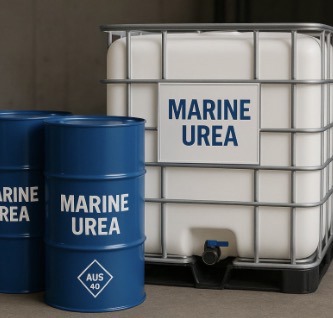
Marine urea: the supply challenge behind emissions compliance
Why reliable urea supply is becoming an increasingly important part of marine emissions management
When we introduced PBT’s expanded AdBlue and Urea supply services earlier this year, the focus was straightforward: helping shipowners and operators secure reliable access to the products they need for their vessels’ emissions control systems.
Since then, the wider urea market has become more challenging.
Global urea supply has become more volatile in 2026, with geopolitical disruption, higher energy costs and freight pressure affecting availability, pricing and lead times across several major supply regions. (Wilhelmsen)
For shipping, this matters because urea is not simply another consumable. For vessels equipped with Selective Catalytic Reduction (SCR) systems, it is an essential part of the process used to reduce NOx emissions.
From compliance requirement to operational consideration
Under MARPOL Annex VI, NOx emission limits apply to marine diesel engines, with the stricter Tier III requirements applying to qualifying ships operating in designated NOx Emission Control Areas. The North Sea and Baltic Sea are among the existing NOx ECAs, while the Canadian Arctic and Norwegian Sea became ECAs on 1 March 2026. (Internationale Maritieme Organisatie)
SCR technology is one of the established solutions for achieving these stricter NOx limits. The IMO’s updated 2025 SCR guidelines further reflect the continued role of SCR systems in marine emissions compliance. (IMO)
This makes the availability of the required reducing agent an operational consideration as well as a procurement issue.
Why urea supply is becoming more complex
Urea production is closely linked to natural gas and energy markets. When energy costs rise or production and trade flows are disrupted, the effects can move quickly through the urea supply chain.
At the same time, shipping companies operate across multiple regions and ports. A vessel may require urea at a specific location and within a specific operational window, making local availability and lead time just as important as the headline market price.
In a tighter market, simply knowing the global price of urea is therefore not enough.
The more relevant questions become:
Is the required product available?
Where is it available?
Can it be delivered when the vessel needs it?
Planning matters
For vessel operators, effective procurement starts with understanding consumption patterns and voyage schedules.
Urea requirements can be incorporated into bunker and port-call planning, rather than treated as an isolated purchase. This becomes particularly relevant for vessels operating regularly within or through NOx ECAs, where SCR systems form part of the vessel’s compliance strategy.
Forward planning can also help operators manage changing lead times and reduce the risk of last-minute sourcing.
A reliable supply chain matters
As the marine industry continues to operate under increasingly complex emissions requirements, the focus is shifting from simply having the right technology on board to ensuring that the entire operational chain supports compliance.
For SCR-equipped vessels, that chain includes the reliable availability of the appropriate urea solution.
At PBT, we see this as an extension of our role in supporting vessel operators with their marine fuel and emissions-related supply requirements. By combining sourcing, market awareness and delivery coordination, the objective is simple: Assisting clients have the right product available where and when it is needed.
As emissions compliance becomes increasingly operational, reliable urea supply becomes part of the equation.
Need urea where and when you need it? Talk to us about your vessel’s requirements, delivery location and planning. Contact us to discuss your next supply!