
The changing economics of marine fuels
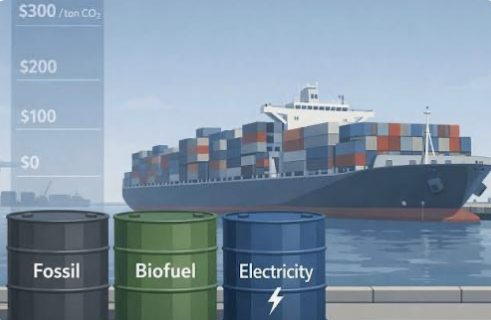
When lower-carbon fuels become a commercial choice
For years, lower-carbon marine fuels have largely been discussed in terms of their environmental benefits, and the additional cost associated with them.
But the bunker market is becoming more dynamic.
Recent price movements in key bunkering hubs show that the gap between conventional marine fuels and biofuel blends can change significantly over relatively short periods. In Rotterdam, B30-VLSFO prices recently declined while conventional VLSFO remained broadly stable. In Singapore, the price movement for B30-VLSFO was even more pronounced.(Engine - Biofuel Bunker Snapshot)
This does not mean that lower-carbon fuels are suddenly cheaper across the board. It does mean that the assumption of a fixed “green premium” is becoming increasingly outdated.
The premium is not fixed
The economics of biofuel blends depend on a range of factors, including feedstock costs, blending ratios, regional supply, bunker demand and conventional fuel prices.
As these variables change, so does the relative attractiveness of different fuel options.
Recent fuel-switch data illustrates just how quickly these economics can change. In Singapore, B100 has moved back to a discount against LSMGO, while the economics of liquefied biomethane vary considerably depending on the vessel’s engine type and the conventional fuel used as the benchmark. (Engine - Fuel Switch Snapshot)
For shipowners and operators, this creates an opportunity, but also a need for more informed decision-making.
The most interesting fuel option for one vessel may not necessarily be the right choice for another.
More than a price comparison
Price is only one part of the decision.
Fuel availability, vessel compatibility, route, bunkering location and the applicable regulatory framework all need to be considered alongside the headline bunker price.
This makes fuel procurement increasingly dynamic.
The relevant question is no longer simply:
“What is the cheapest fuel?”
Instead, operators need to consider:
“Which fuel makes the most commercial sense for this vessel, on this voyage, in this market?”
That may be a conventional fuel. It may be a biofuel blend. And as the marine fuel landscape continues to develop, other lower-carbon options may become relevant too.
Flexibility is becoming more valuable
The growing availability of alternative fuels does not mean that shipping companies need to commit to a single fuel pathway.
A more flexible approach can allow operators to respond to changing market conditions and fuel availability, while also considering their environmental and regulatory objectives.
Rotterdam is a good example of this evolving landscape. As one of the world’s major bunkering hubs, the port offers access to both conventional marine fuels and an expanding range of alternative fuel options. (Port of Rotterdam - Bunkering in Rotterdam)
For fuel buyers, this creates more choice, but also more variables to assess.
From fuel choice to fuel strategy
The marine fuel market is becoming more diverse, and the economics are changing with it.
Lower-carbon fuels should therefore not be viewed solely as a sustainability expense. Under the right market conditions, they can become a commercially relevant part of a broader fuel procurement strategy.
The key is understanding when that makes sense.
That requires keeping track of fuel prices, availability and market developments, while taking the specific vessel and voyage into account.
The future of marine fuel procurement may not be about choosing one fuel and sticking with it.
It may be about having the flexibility and market insight to choose the right fuel, in the right place, at the right time.
At PBT, we believe that informed fuel decisions start with understanding the market behind the price.
Looking for the right fuel strategy? Let's talk!